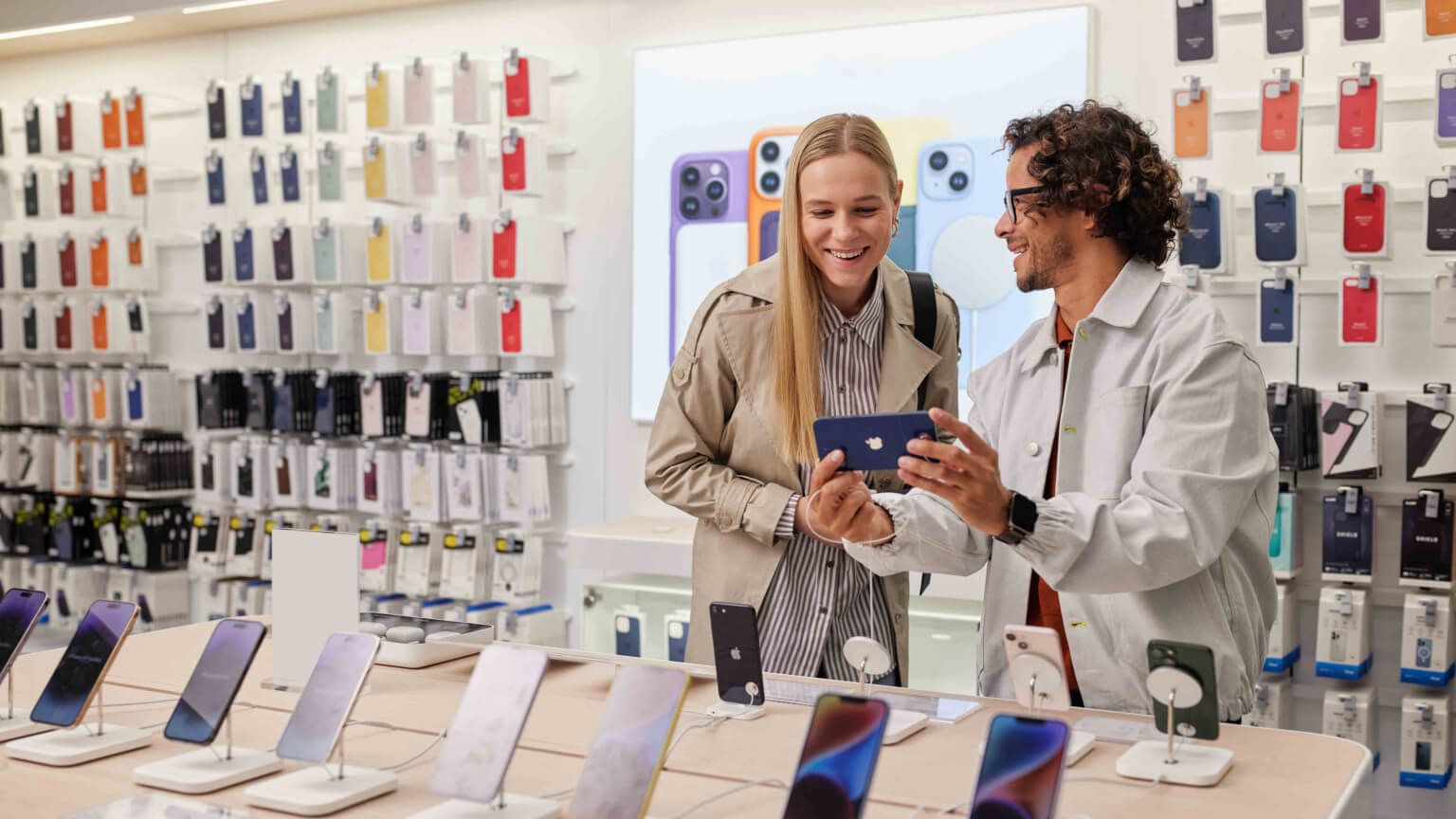
“The trend of renting instead of owning products is growing across various sectors every year. The trend of renting electronics, such as smartphones and laptops, is supported by EU regulations directed at manufacturers, which state that electronics should be valued more and not simply discarded after one use. Electronic waste is one of the fastest-growing waste streams in Europe; for example, only 12–15% of mobile phones are recycled,” said Inbank’s Head of Business Development, Piret Paulus.
According to Paulus, the global electronic device rental market is expected to reach 100 billion euros by 2027, growing at an average rate of 15% per year. Device rental is expected to account for around 10% of the total electronics sales market in the near future.
Antti Adur, Head of iDeal Group, also confirmed that for the acquisition of both iPhones and MacBooks, rental services are expected to become the dominant ownership method within a few years. “Since the iPhone has been the longest-running rental product, its rental is the most popular. However, the growth in Mac and Watch rental numbers shows that people have embraced the service and increasingly choose rental products for their convenience and low rental fees,” said Adur.
According to Inbank’s Head of Business Development, the rental service for electronic devices is primarily a convenience service that allows customers to rent a device for a desired period instead of buying it, with a fixed monthly fee. “Renting is an affordable way to have the latest devices, which is why the service is gaining popularity. Moreover, renting is cheaper than purchasing the device outright, as the customer only pays for the period they actually use the device. Devices retain residual value, meaning the customer never pays the full value during the rental period,” explained Paulus, adding that rental devices are usually insured, making their use worry-free for consumers.
Rental Service is More Affordable Than Purchasing a Device
The rental period is closely related to the planned use period of the device. “For computers, a 2-3 year rental period is more popular, as people don’t generally want to replace a computer every year. For smartphones, a shorter rental period is also considered, as many users wish to immediately switch to a new phone when a new iPhone model arrives,” explained an iDeal expert about consumer habits.
According to Adur, rental service prices vary between 30-50 euros. “Rental service fees are cheaper compared to installments, so depending on the rental period, monthly fees are between 25-50€. With installments, customers’ monthly payments are at least 60 euros, so with a rental product, they can also add accessories and additional services and still pay a lower monthly fee,” said Adur, who believes this is more affordable than immediately buying a device worth a few thousand euros.
“Rental service is not a credit product, making it a preferred choice for a much broader target group, including customers who prefer to pay monthly for a device but don’t want to enter into an installment or loan agreement. Low monthly fees make the offer attractive to new segments, such as students. Additionally, the insured product is often rented for school-aged children,” explained Paulus.
She emphasized that environmental friendliness also speaks in favor of rental services. “Every year, the number of people trying to make more environmentally-friendly consumer choices increases. For both the consumer and the retailer, a rental service means that devices always get a new life instead of sitting unused in a drawer and becoming waste. There are nearly 700 million unused mobile phones in EU households because consumers don’t know what to do with them once they buy a new one. After the rental service ends, the devices re-enter circulation, as small consumer electronics like mobile phones, tablets, and laptops hold great value in the circular economy. They contain various materials and critical raw materials that can be recycled or reused with efficient waste processing. Additionally, demand is rising for so-called second-hand devices,” Paulus explained the positive impact of the rental service on the circular economy.