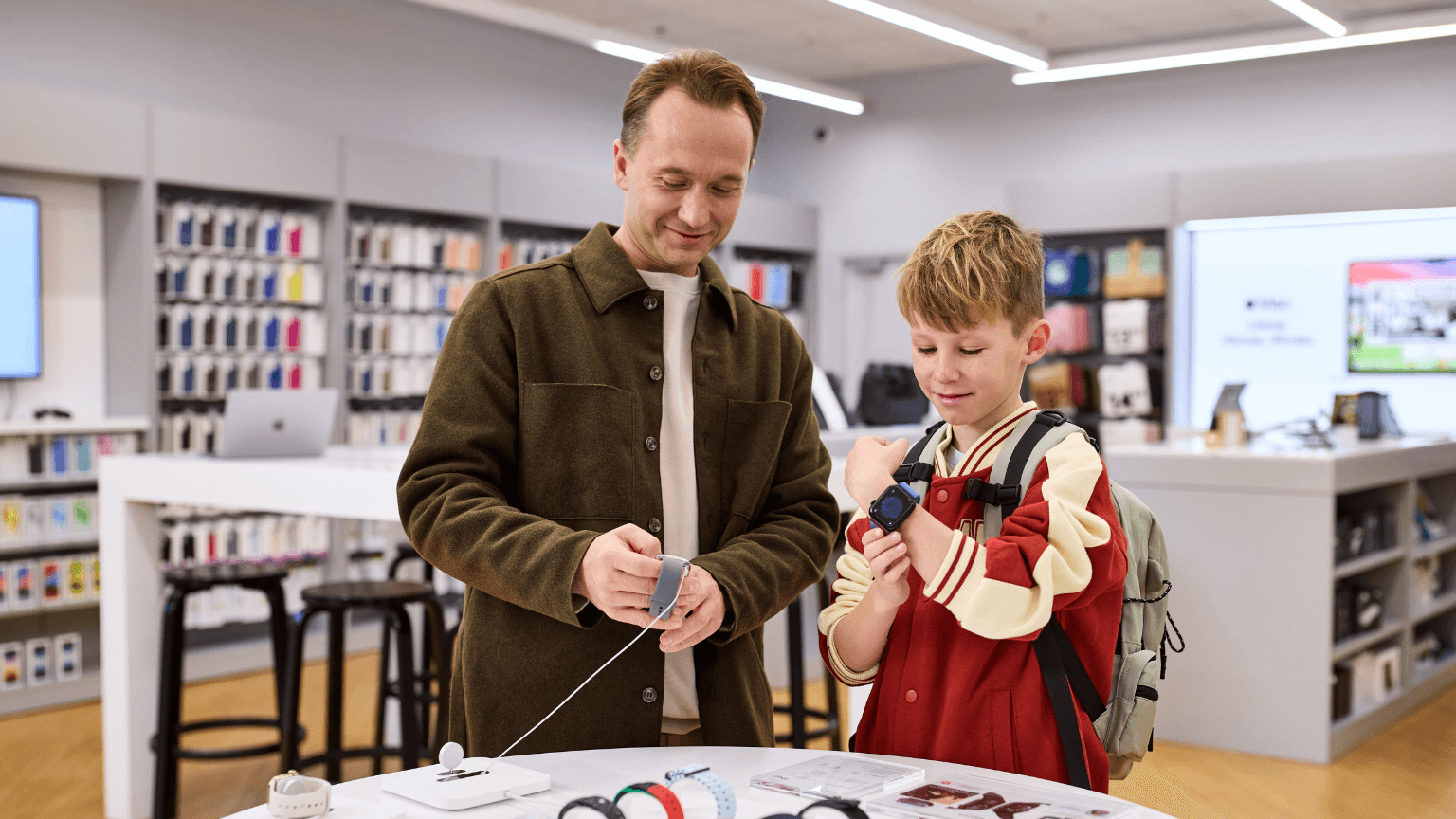
According to Euronics Head of Client Solutions and Quality Andrei Fjodorov, interest in new smartphones has slightly declined in recent years, as the economic situation remains challenging and existing devices often meet people’s basic needs. “Compared to 2–3 years ago, the average customer now replaces their phone less frequently, but invests in a more expensive model,” said Fjodorov.
However, the arrival of new flagships such as the Apple iPhone 16, Samsung S25 and Google Pixel 9 series devices still drives sales growth, especially in autumn, when the beginning of the school year coincides with major manufacturers’ model updates. “This also boosts interest in previous-generation devices, which become more attractive in price,” added Fjodorov.
For schoolchildren, more affordable but reliable models are preferred While Apple and Samsung top models remain the most popular overall, for schoolchildren parents usually buy refurbished iPhones, Samsung A series or Xiaomi Redmi series devices. “They offer good value for money and are reliable enough for everyday schoolwork,” said Fjodorov.
Jussi Valdsalu, Head of Growth for Small and Medium-Sized Businesses at Apple reseller C&C Baltics, also confirmed the autumn trend in gadget purchases, as new models usually enter the market in September.
Valdsalu added that the start of the school year is also the peak season for buyback programs. “Although buyback campaigns run throughout the year, they are most active during new product launches. Buyback is a good way to reduce costs when purchasing a new device, and it also helps reduce e-waste, since parts from old devices are reused in the production of new ones. In addition, it prevents old devices from simply gathering dust in a drawer,” he said.
Rent, buy, or choose refurbished devices? According to Inbank Head of Partner Business Birgit Listmann, the most important thing for families is to find a balance between price, quality and payment options. “The start of the school year can put a serious strain on a family budget, especially if several gadgets are needed in addition to other supplies. For larger purchases, it’s wise to leave savings untouched and consider installment solutions, which are easier to manage than paying the full amount at once from savings,” she said.
Listmann also highlighted the importance of assessing actual usage needs. “For example, a second-hand device works well if a child mainly needs a phone or computer for communication, homework and basic apps. Outright purchase is reasonable if it’s a more budget-friendly device or if it can be bought during a discount campaign. Renting devices, on the other hand, is suitable for families who prefer to upgrade to a newer model every couple of years and don’t want old devices to sit unused. Rental makes it easy to return the equipment and replace it with a newer one if needed, without worrying about resale or depreciation. Moreover, rented devices with insurance packages are often chosen for schoolchildren, since gadgets tend to get lost or broken,” she explained.
Popularity of installments and “pay later” solutions is growing According to Euronics Head of Quality Andrei Fjodorov, installment purchases are still on the rise. “On average, already 20–40% of smartphone purchases are made with installments, and this share is clearly increasing. Both the VAT increase and the general decline in consumer confidence contribute to this trend,” he noted.
Inbank expert Birgit Listmann explained that alongside installments, the use of “pay later” solutions is also growing rapidly, which differ in nature from installments: with a “pay later” option, the purchase can be split into, for example, three equal parts or paid in full within 30 days without interest or extra fees.
“Since this is not a long-term credit obligation, but rather a short-term way to spread expenses, it is being used more and more – already 64% of all payment solution agreements signed this year have been in the ‘pay later’ form. For families, this provides a way to spread the large expenses of back-to-school season conveniently over several months, without paying more than the actual price of the product. Installments, on the other hand, are a classic credit product, meaning a longer-term obligation: usually 12 to 36 months. And while the interest rate may be low, installments generally come with a contractual obligation. They are suitable for larger purchases, such as expensive laptops or smartphones, where the amount may be too large for a one-time payment,” said Listmann.
Inbank statistics show that in the electronics category, the average purchase amount with installments has remained at the same level compared to last year, but for “pay later” solutions the average purchase amount has decreased by 6%. “This means that people are increasingly using ‘pay later’ even for smaller purchases,” explained Listmann.